Statistical news focuses on the latest figures and trends in Danmarks Nationalbank’s statistics. Statistical news is targeted at people who want quick insight into current financial data.
Half of foreign equities are held via investment funds
Danish investors owned foreign listed equities worth kr. 3,059 billion in August. Around half of these holdings were owned indirectly through Danish investment funds. Looking at the composition of Danish investors’ foreign equity portfolios, US equities continue to account for an increasing share. In August, they represented 56 per cent of Danish investors’ total foreign equity holdings. The increase in holdings is primarily driven by valuation gains on US equities. Technology stocks such as Nvidia, Apple and Microsoft constitute the largest holdings. Today, Danmarks Nationalbank publishes new data on Danish investors’ ownership of securities through Danish investment funds.
Danish employees, pensioners etc. hold more than two-thirds of their foreign equities through investment funds
Note:
Danish investors’ holdings of foreign listed equities. Find data on Danish investor’s holdings here. On Danmarks Nationalbank’s website, it is possible to view the largest individual equity holdings of both households (employees, pensioners, etc.) and the insurance and pension sector, including holdings held through investment funds.
Ownership of stocks and bonds through investment funds is identified through look-through techniques
When an investor, such as a Danish household, purchases units in an investment fund, the investor gains indirect ownership of the securities held by the fund. Investment funds may own stocks, bonds, or units in other investment funds. Look-through refers to the inclusion of investors’ indirect holdings of stocks and bonds through Danish investment funds. To account for funds that invest in other funds, so-called funds of funds, Danmarks Nationalbank applies a three-step look-through procedure in the securities statistics. The first step identifies the stocks, bonds and investment fund units held by a fund. The second step identifies the holdings of stocks, bonds and investment fund units in the underlying funds. The third step identifies stocks and bonds held in the remaining funds identified in the second step. After three look-through rounds, virtually all underlying stocks and bonds have been identified.
Looked-through data provides insight into investors’ actual ownership of securities
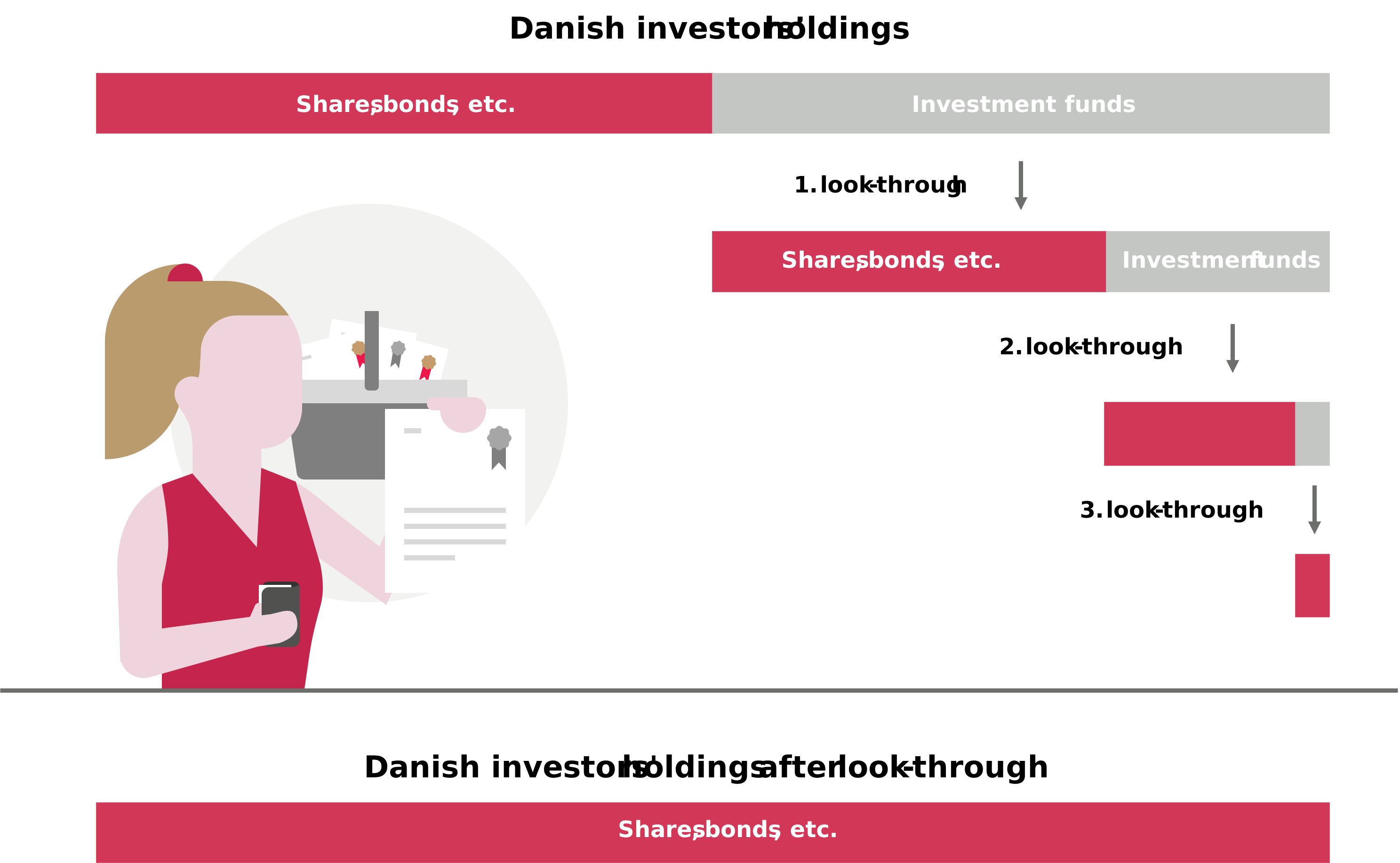
Note.: Illustration of the look-through approach for Danish investment funds. The look-through is performed three times, after which the holdings are allocated to the ultimate investor. Only Danish investment funds can be looked through; foreign funds are therefore treated as securities on an equal footing with stocks and bonds.